سراقب Sarakeb Syrian Heritage Goddess Dresses-Qandoura




سراقب Sarakeb Syrian Heritage Goddess Dresses-Qandoura
🌿Video located in Additional Information.
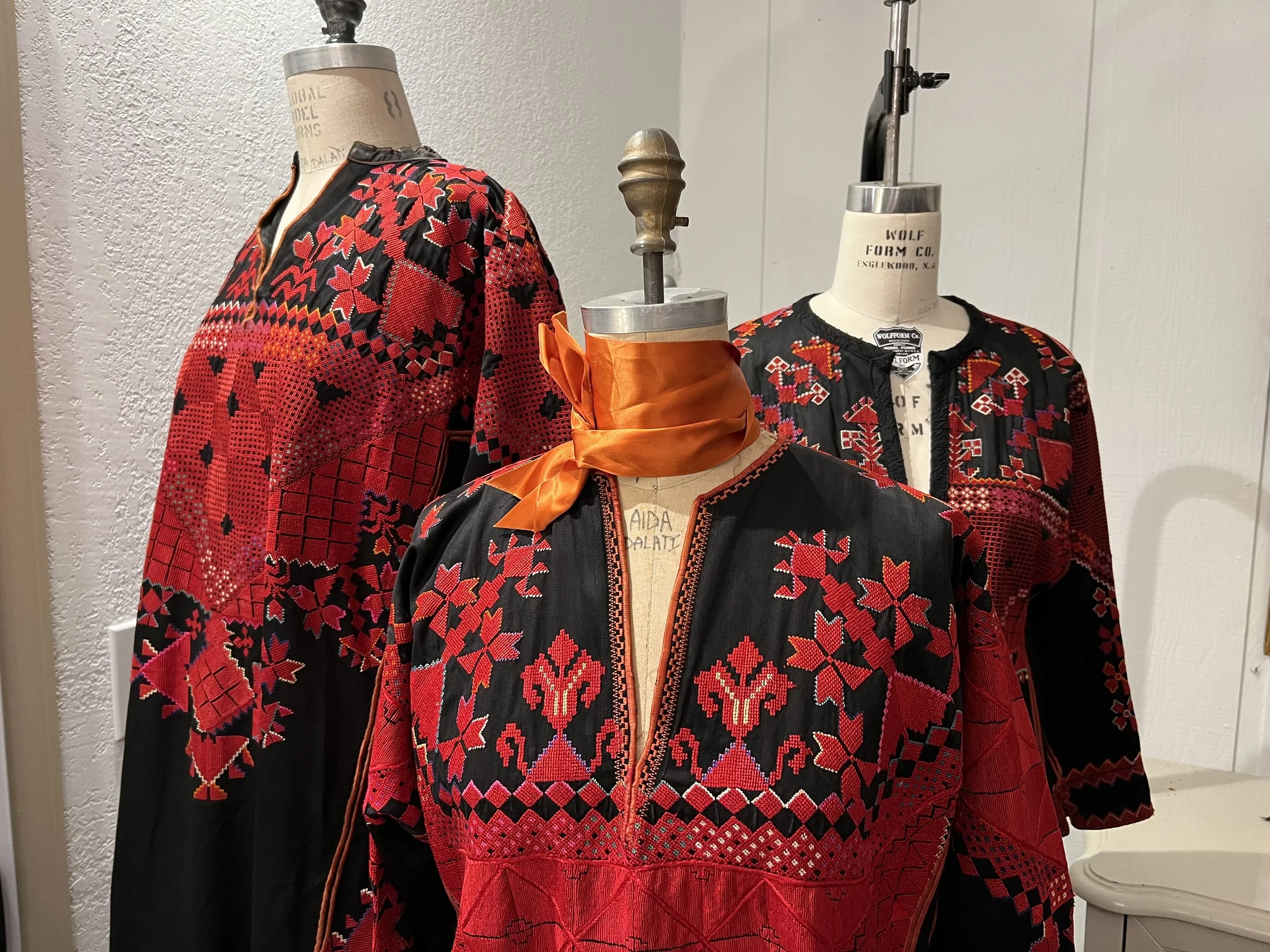
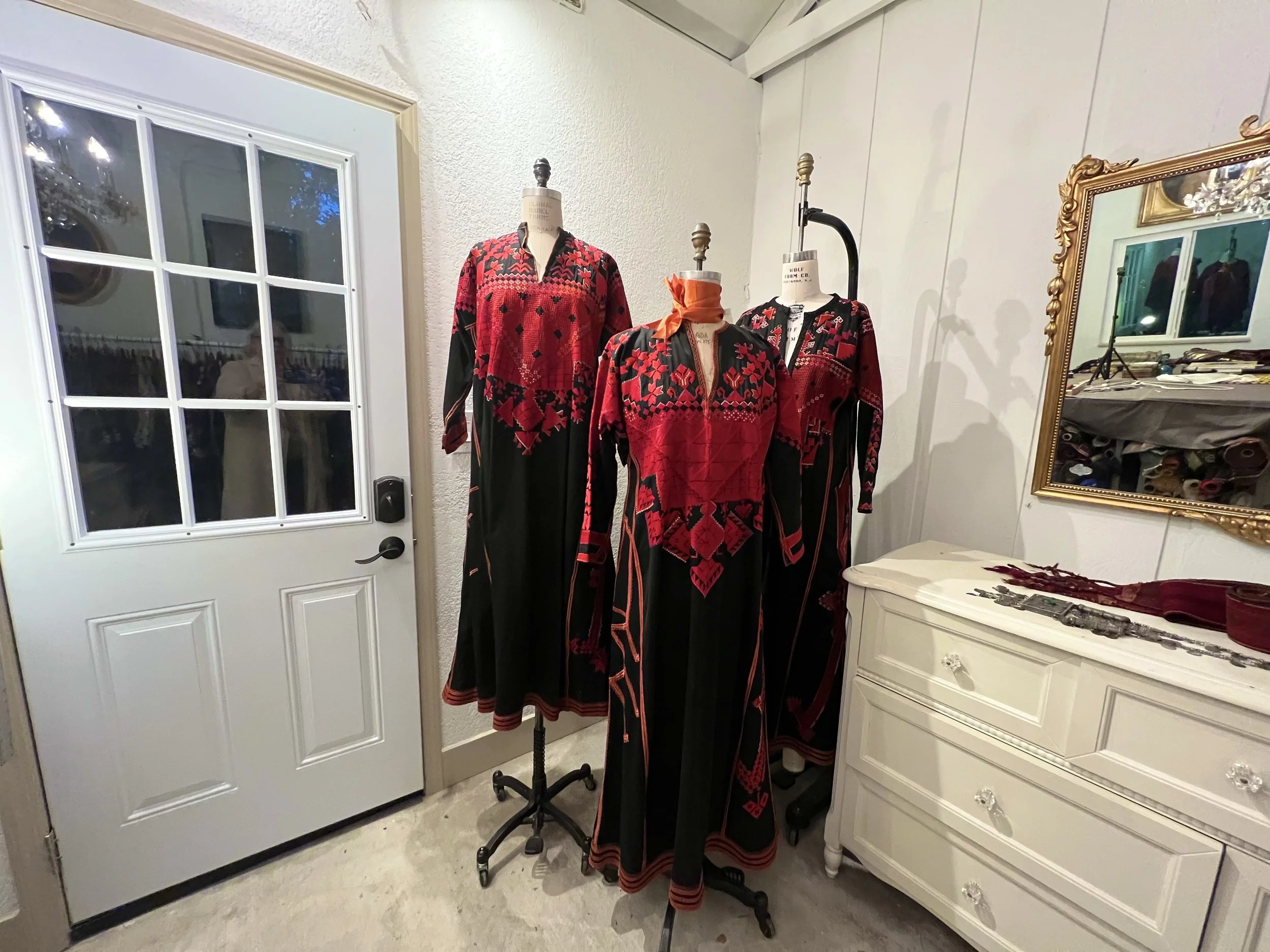
In Saraqib, near the site of ancient Ebla, there is a fustān (فستان) or Qandoura that takes my imagination back to the Bronze Age. When I look at the embroidered women on this dress, I think of goddesses and queens. It gives me a way to imagine how such figures are worn on cloth.
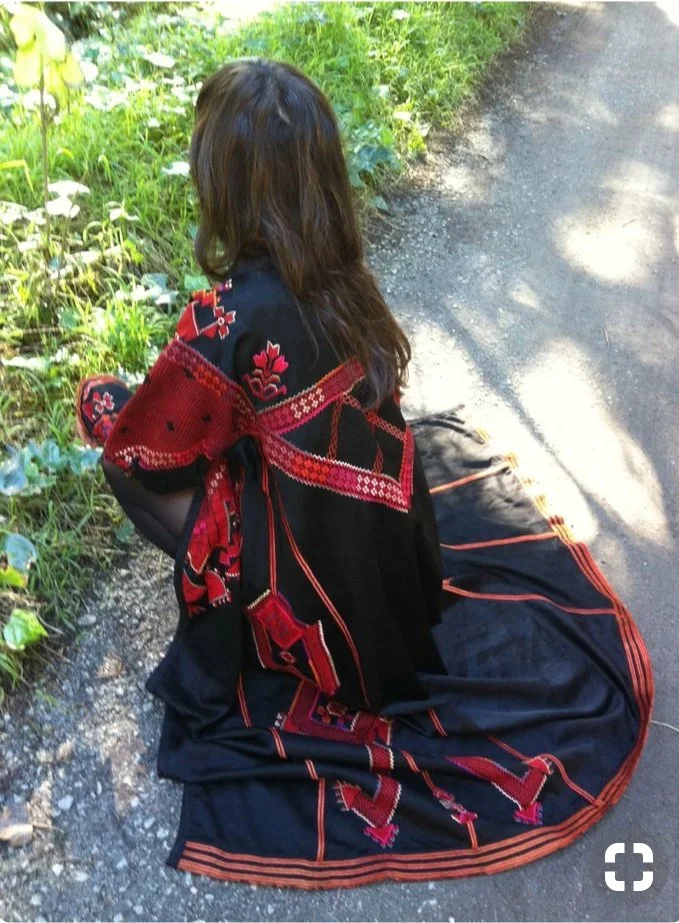
I begin with the cut. The dress follows traditional Arab pattern cutting, with the loom width determining the measurements of the main pieces. Gussets, side panels, and smaller inserts give the dress its shape. Rows of stitching emphasize the seams, and embroidered female figures and plant motifs fill the spaces between them.
What holds my eye is the side the embroiderer chose to leave “empty" in their words. One side carries the figures and foliage, while the other is deliberately left undecorated. I have seen this same use of asymmetry in the dress of Mhardeh. In the folklore I associate with these garments, that deliberate incompleteness has a purpose. It confuses the evil eye and deflects ill will directed at the woman wearing the dress. Is Syrian traditional societies the debate over merits of symmetry verses symmetric balance rages on, I am often asked about which one is bette and why. To be on the safe side I always use the analogy of the two table lamps and how Syrians prefer always two. But if one is more experimental asymmetry or creative asymmetry is a sign of cleverness and that usually make everyone agreeable with my take on it.
Syria Heritage and Costume Collection.
How the dresses of Sarakib or Sarakeb Syria told their stories which go back to the Bronze Age.سراقب سوريا